
Updated August 11, 2026
The 30% federal solar tax credit ended. Here is exactly what replaced it.
If you have been told you can claim 30 percent back on solar panels, whoever told you is working from a page that has not been updated since 2025. The credit for homeowners who buy a system no longer exists. This page sets out what the law actually says, what survived, and who now receives the money.
What the statute says
The operative language is that the credit “shall not apply with respect to any expenditures made after December 31, 2025.” The load-bearing question is what “made after” means, and it is not what most people assume.
Under section 25D(e)(8)(A), an expenditure is treated as made when the original installation of the item is completed. The IRS confirmed this directly in FS-2025-05, published August 21, 2025:
“If installation is completed after December 31, 2025, the expenditure will be treated as made after December 31, 2025, which will prevent the taxpayer from claiming the section 25D credit.”
So a homeowner who signed in October 2025, paid a deposit in November 2025 and had the system switched on in February 2026 gets nothing. This is the single most common piece of misinformation still circulating in the US solar market, and it costs people real money.
Source: IRS FS-2025-05, FAQ 7, August 21, 2025
Statute: 26 U.S.C. s25D, as amended by the One Big Beautiful Bill Act, P.L. 119-21, enacted July 4, 2025.
Where the 30 percent actually went
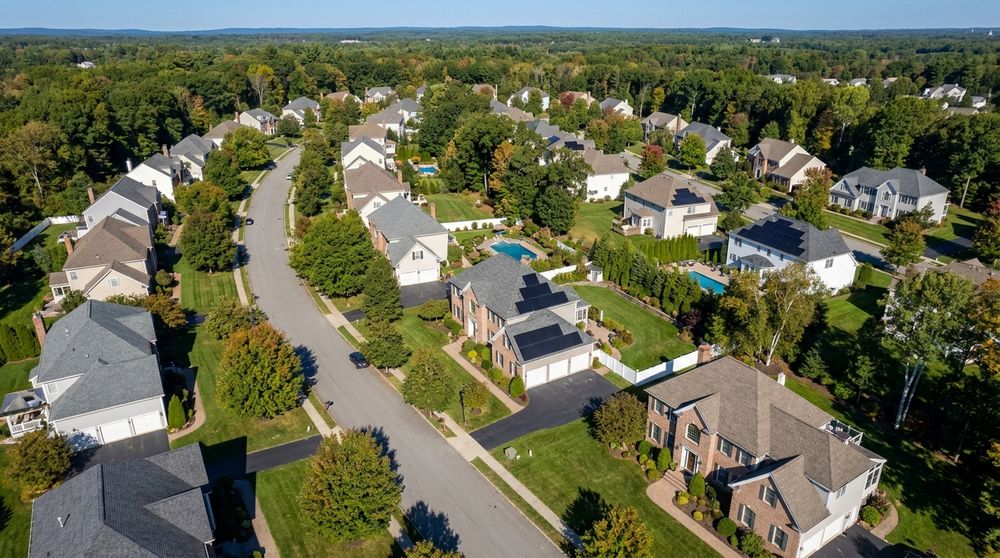
It did not disappear. It moved. Section 48E, the clean electricity investment credit, still carries 30 percent, and residential rooftop solar that is leased to a homeowner remains eligible. An earlier version of the bill would have removed residential solar leasing from 48E entirely; the enacted law narrowed that exclusion to solar water heating and small wind only.
The consequence is straightforward. A finance company buys and owns the system, claims the 30 percent itself, monetises it through the tax equity or credit transfer market, and prices part of that value into what it charges you each month. You do not see a credit. You see a lower monthly payment than would otherwise be possible.
That is why third-party ownership went from a minority financing route to roughly 55 to 65 percent of US residential installations during 2026. It is not a fashion. It is where the money is.
Sources: NAHB, July 2025 on leased residential solar remaining eligible under 48E; Mayer Brown, June 25, 2026 on the shift to third-party ownership and the pass-through mechanism.
The 48E clock
48E is not permanent either. The placed-in-service deadline depends on when construction began:
| Construction began | Must be placed in service by |
|---|---|
| Construction began before Dec 31, 2025 | Placed in service by Dec 31, 2029 |
| Construction began Jan 1 - Jul 4, 2026 | Placed in service by Dec 31, 2030 |
| Construction began after Jul 4, 2026 | Placed in service by Dec 31, 2027 |
Source: IRS Notice 2025-42 (August 15, 2025) on beginning of construction; placed-in-service deadlines per the enacted text of P.L. 119-21. Residential rooftop, being well under 1.5 MW AC, retains the 5 percent cost safe harbour.
We are past July 4, 2026. Anything starting now runs to a December 31, 2027 deadline unless the provider is drawing on equipment it safe-harboured earlier. For a residential rooftop system that timeline is comfortable, but it is a legitimate question to put to any company offering you a lease in 2027.
What this means for the four states we cover
The buying case got weaker
A $22,000 cash purchase used to carry a $6,600 federal offset. It no longer does. That has narrowed the gap between owning and leasing considerably, and in some cases reversed it. If someone shows you a payback calculation that still includes 30 percent, the whole model is wrong.
State money matters more than it did
With the federal layer gone for buyers, the state layer is most of what is left. New York still gives up to $5,000 and reaches lease and PPA customers. New Jersey pays $77 per MWh for 15 years. Connecticut runs a 20-year tariff. Florida gives you exemptions and sunshine.
Claims you should treat as a warning sign
If a solar company's website or a salesperson tells you any of the following in 2026, they are either not keeping up or not being straight with you:
- “Claim the 30 percent federal solar tax credit” on a purchase or loan
- “The credit runs through 2032” or “steps down to 26 percent”
- “Put a deposit down to lock in this year's credit”
- “A government program will cover the cost”
- “Free solar panels” or “no cost solar” without immediately explaining that it means a lease or PPA
The Federal Trade Commission has published guidance stating that offers of free or no-cost solar panels are scams, and that companies claiming a government program will cover the whole cost are lying. In March 2026 the New York Attorney General filed a $275 million action against a solar seller on substantially that pattern.
Sources: FTC business guidance, August 7, 2024; FTC consumer alert, September 26, 2024; NY Attorney General v. Attyx, March 23, 2026.
FAQs